
The best books about ancient Egypt to read before you visit, chosen stop by stop
The best books about ancient Egypt to read before you visit, chosen stop by stop
If you read one book about ancient Egypt before your trip, make it The Rise and Fall of Ancient Egypt by Toby Wilkinson: three thousand years in a single volume that reads like a novel and gives you the timeline every temple hangs on. If you read two, add a novel that puts you inside the period, Mika Waltari's The Egyptian or, for a lighter ride, Wilbur Smith's River God. From there the list branches by what you plan to see: Carter for the Valley of the Kings, Herodotus for Giza, Mahfouz for Cairo, Christie for Aswan. Below we sort the books by reader and by stop, explain what an Egyptology guide adds to the reading, and give you a six-week plan.
How to use this list: before, during and after the trip
You do not need to read everything. Egypt is a joy for people who have never opened a book about it, because a good guide tells you what you need in front of each wall. But there is a clear difference between the traveler who arrives knowing who Hatshepsut was and the one who meets her for the first time on the terrace of her temple. The first looks with questions, the second with surprise.
Our practical rule: one general history before you leave, one novel during the trip, and the big illustrated books after you get home. The trip hands you more reading time than you expect. The sleeper train from Cairo to Luxor, the short domestic flights, and above all the long afternoons on a Nile cruise deck between Edfu and Kom Ombo all swallow chapters.
We name authors and titles only, so you can find the edition that suits you, in print, on a Kindle or as an audiobook.
One-volume histories: the spine of everything else
This is the heart of the list. One well-chosen history gives you the skeleton the rest hangs on: Old Kingdom and pyramids, New Kingdom with Luxor and Ramesses, the Ptolemies and Cleopatra. Without it, the temples blur into one another by day three.
Toby Wilkinson, The Rise and Fall of Ancient Egypt
The book we recommend to everyone, and the one travelers most often show us with the margins full of pencil. Wilkinson tells three millennia with real narrative pull and does not hide the brutality of pharaonic power or the propaganda behind the reliefs you will see at Karnak. It takes about two weeks of quiet evenings.
Ian Shaw, editor, The Oxford History of Ancient Egypt
The scholarly reference, with each period written by a different specialist. Less fun than Wilkinson and more academic, but ideal if this is your second visit or you like to check what you are told. Read the chapters on the periods you will actually see.
Barry Kemp, Ancient Egypt: Anatomy of a Civilization
Kemp directed the excavations at Amarna for decades, and his book asks how the society worked rather than who reigned. Read it if you care more about grain stores, town planning and temple economies than about dynasties. Demanding, rewarding, best read after Wilkinson.
If you would rather listen, Bob Brier's Great Courses lecture series The History of Ancient Egypt covers the same ground as Wilkinson.
The classics: Carter, Herodotus and a Victorian on the Nile
Howard Carter, The Tomb of Tutankhamen
Carter, with Arthur Mace on the first volume, told the discovery of the tomb in his own words. The candle through the hole in the door and the answer about wonderful things are here, first person. Modern editions often carry the title The Discovery of the Tomb of Tutankhamun. Read it before you go down into the tomb and before you see the complete treasure in the Grand Egyptian Museum; every object means more when you know what it cost to get it out.
Herodotus, The Histories, Book Two
The Greek visited Egypt in the fifth century BC and gave the second book of his Histories to what he saw and what the priests told him. It mixes sharp observation with tall tales, and it is the source of cliches that weak guides still repeat: the hundred thousand laborers on the Great Pyramid come from here. Any standard translation works. Read only Book Two.
Amelia Edwards, A Thousand Miles Up the Nile
An English novelist hired a sailing boat in 1873 and wrote the best travel book about the river. Her pages on Abu Simbel before it was moved and Philae before it was flooded are worth the whole book, and free digital editions are everywhere.
Novels set in ancient Egypt
A novel does what no manual can: it walks you through Thebes in the heat, with incense in the air.
Mika Waltari, The Egyptian
The absolute classic, a Finnish novel that became a huge US bestseller in translation. A physician of the age of Akhenaten travels through Egypt and the eastern Mediterranean, telling his life from old age. Long, melancholy, and perfect for a seven-night cruise.
Naguib Mahfouz, Akhenaten: Dweller in Truth
Egypt's Nobel laureate tells the heretic pharaoh through witnesses who contradict one another. Short enough for one afternoon, and it pairs well with our guide to the pharaohs and how their power worked.
Wilbur Smith, River God
The popular choice, and there is nothing wrong with that. A slave and polymath named Taita narrates the collapse of the Middle Kingdom and the Hyksos invasion with battles, chariots and melodrama. Treat it as an adventure story, not history: Smith takes liberties with dates and geography, but the book puts the Nile and the desert in your head in a way that makes Luxor feel familiar. The Seventh Scroll is the sequel for people who could not put it down.
If you prefer biography to fiction, Kara Cooney's The Woman Who Would Be King on Hatshepsut and Stacy Schiff's Pulitzer-winning Cleopatra: A Life are the two most American travelers already own.
Modern Cairo, Aswan and Alexandria are worth reading too
The traveler who only reads about pharaohs misses half the country. The Cairo you will actually walk through, the one of coffeehouses, alleys and rooftops, has an enormous literature in English.
Naguib Mahfouz is the key. The Cairo Trilogy, made up of Palace Walk, Palace of Desire and Sugar Street, follows one family across three generations in the old city. Midaq Alley is shorter and fits in two evenings. When you walk Khan el Khalili on a tour of Islamic Cairo, you are walking through his pages, and the Fishawi coffeehouse from his stories is still open.
Agatha Christie, Death on the Nile, is the book everyone brings on the cruise, and rightly so. Christie knew Aswan and the Old Cataract Hotel, and the novel begins there. Read it in Aswan, on a felucca if you can manage it.
Alaa Al Aswany, The Yacoubian Building, portrays contemporary Egypt through the tenants of a real apartment block on Talaat Harb Street in downtown Cairo. For non-fiction, Max Rodenbeck's Cairo: The City Victorious is the best single portrait of the capital.
For Alexandria, Lawrence Durrell's The Alexandria Quartet, four novels beginning with Justine, and the poems of Constantine Cavafy, whose apartment is now a small museum. Neither shows you Cleopatra's city, which lies under the harbor, but both explain its melancholy.
Hieroglyphs for beginners: the manual that actually works
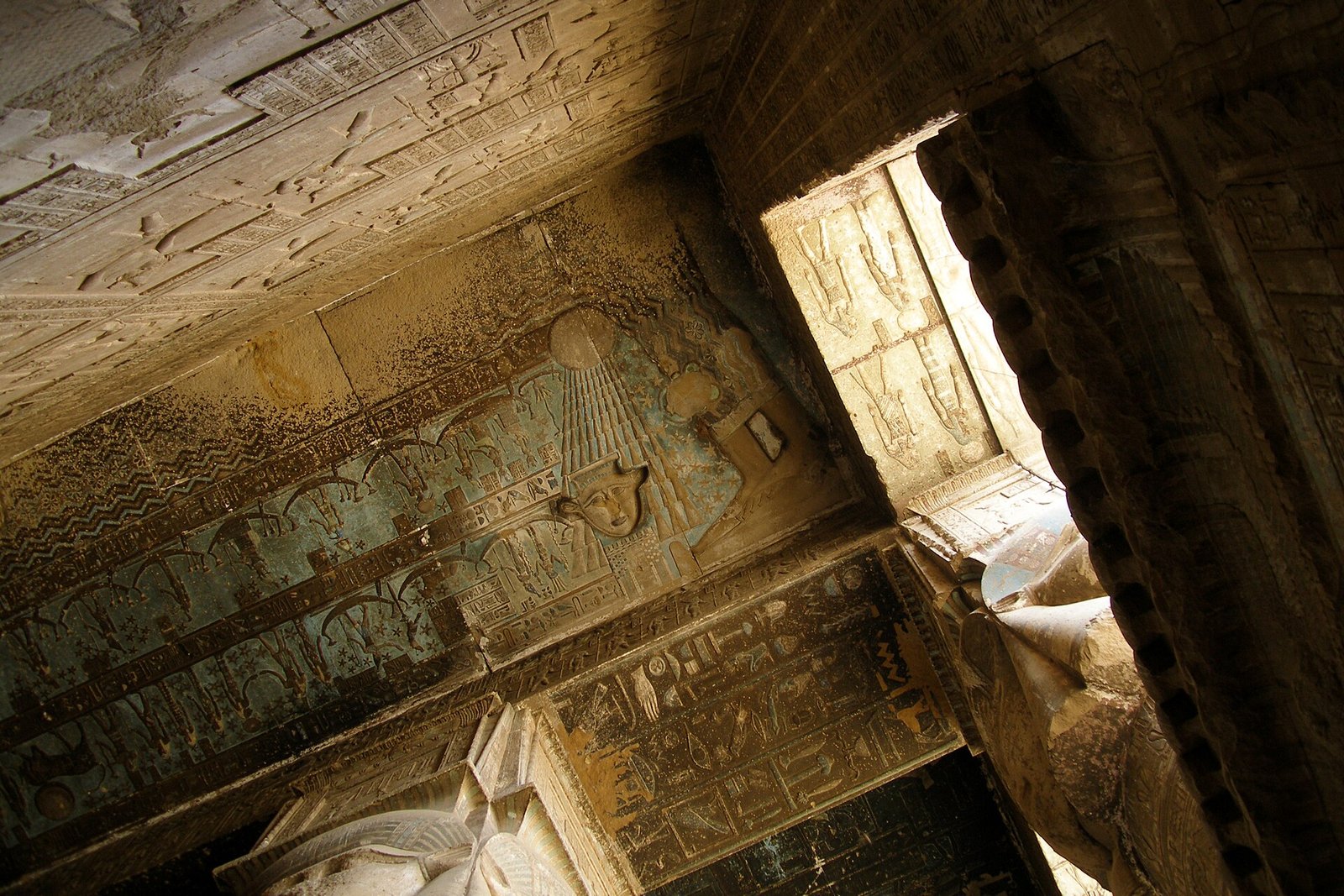
Learning to read a real royal cartouche in two weeks is possible, and it changes the visit. You will not translate a whole wall, but recognizing the name of Ramesses or Hatshepsut on an obelisk is a real thrill. Our guide to what hieroglyphs mean and how to read them covers the basics; these are the books.
Mark Collier and Bill Manley, How to Read Egyptian Hieroglyphs
Published by the British Museum, this is the manual we always recommend. It works from real inscriptions on stelae and coffins, moves in short exercises, and within a few lessons you are reading cartouches and offering formulas, which are exactly what repeats most in temples and tombs. Take it in paperback, because you will use it with a finger on the page in front of a wall.
Raymond Faulkner, The Ancient Egyptian Book of the Dead
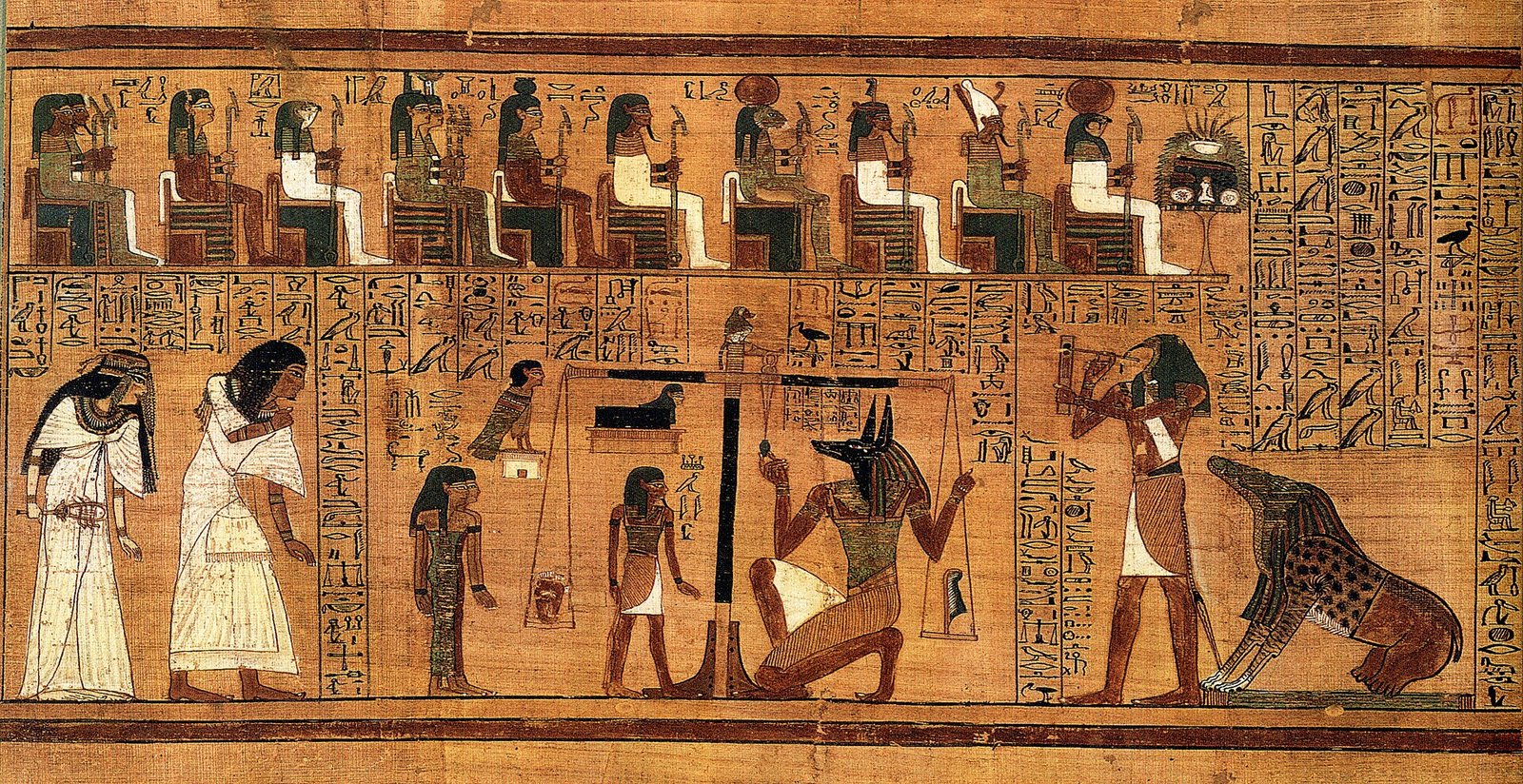
The British Museum edition reproduces the Papyrus of Ani with Faulkner's translation alongside. Read it by chapter, not straight through, and you will recognize the weighing of the heart and the spells painted in the royal tombs.
If Collier and Manley moves too fast, Bill Manley's Egyptian Hieroglyphs for Complete Beginners is the gentler start. Alan Gardiner's Egyptian Grammar is the reference for looking things up later, not for starting.
Children's books and illustrated books
A child who has seen the cutaway of a pyramid walks into the Great Pyramid looking for the Grand Gallery; the child who has not walks in looking for the exit. Our family guide to Egypt with kids has the rest of the advice; these are the books.
| Age | Book | Why it works |
|---|---|---|
| 5 to 8 | Mary Pope Osborne, Mummies in the Morning (Magic Tree House) | The first chapter book most American kids read about Egypt; a tomb, a ghost queen and a hieroglyph puzzle |
| 6 to 9 | Rob Lloyd Jones, See Inside Ancient Egypt (Usborne) | Lift-the-flap cutaways of a pyramid, a temple and a house; almost no reading required |
| 8 to 12 | George Hart, Ancient Egypt (DK Eyewitness) | Photographs of real objects, many of which they will then see in the museum |
| 8 to 12 | Stephen Biesty, Egypt in Spectacular Cross-Section | Drawn cutaways of a boat, a temple and a tomb; the book kids fight over on the plane |
| 13 and up | Waltari, Wilbur Smith, Christie | The same novels as the adults; most teenagers start with River God |
For adults, the big illustrated volumes are the best thing to open at the kitchen table after you get home: Mark Lehner, The Complete Pyramids; and Nicholas Reeves and Richard H. Wilkinson, The Complete Valley of the Kings, tomb by tomb. Too heavy to travel with, too good to skip.
What to read for each stop on the itinerary
If you would rather read along the route than by genre, this is the matching we use.
| Stop | Read before | What you will recognize |
|---|---|---|
| Pyramids of Giza | Lehner, The Complete Pyramids; Herodotus, Book Two | The valley temples, the causeway, and where Herodotus got it wrong |
| Saqqara and Memphis | Kemp; the Imhotep chapter in Wilkinson | The farm and workshop scenes in the mastabas, and the leap the Step Pyramid represents |
| Luxor east bank | R. H. Wilkinson, The Complete Gods; Cooney on Hatshepsut | The hypostyle hall at Karnak, Hatshepsut's obelisks, who is who in the reliefs |
| Luxor west bank | Carter; Reeves and Wilkinson; Faulkner's Book of the Dead | Tutankhamun's tomb, and the hours of the night painted in the royal tombs |
| Aswan and Philae | Christie, Death on the Nile; Amelia Edwards | The Old Cataract, the first cataract, and the felucca scene that opens the novel |
| Abu Simbel | The Ramesses chapter in Wilkinson; Edwards on the sand-buried facade | Nefertari in the small temple, the Battle of Kadesh on the north wall |
| Cairo and Alexandria | Mahfouz, Al Aswany, Durrell; Carter for the museum | Khan el Khalili, Fishawi, the block on Talaat Harb, the Corniche |
For the Valley of the Kings a little funerary theology helps, because the walls tell the sun's journey through the night. And for Abu Simbel, if you read one thing, make it the Battle of Kadesh: the north wall of the great hall is that battle told by Ramesses himself.
How an Egyptology guide changes what you get from the reading
Reading gives you the map; the guide gives you the scale. A book can explain what an offering formula is, but it is the guide who points to one on a door jamb, reads it out loud, and teaches you to find the next one yourself. Licensed guides in Egypt hold degrees with Egyptology coursework, and many read hieroglyphs fluently.
The English-speaking guides at Explora Egipto are used to travelers who arrive with Wilkinson underlined, and they like it. When the group already knows who Hatshepsut was, the time in front of her temple goes to what no book covers.
- They correct. Herodotus, Wilbur Smith and the movies leave wrong ideas behind, and the guide dismantles them in front of the evidence: no slaves built the pyramids, and the workers' town at Giza proves it.
- They locate. The chapter you read about the Battle of Kadesh is on one specific wall. The guide takes you to it and reads it to you.
- They update. What came out of the ground in the last few seasons is not in any book yet. The guide knows, because guides talk to the archaeologists working on site.
One piece of advice: tell your guide on day one what you have read. They will drop what you already know and add what you are missing.
Paper or screen, and a six-week reading plan
The illustrated books stay home. In your carry-on goes an e-reader with the novels and the general history, plus one paperback for the cruise deck. The hieroglyph manual travels in paper, because a tablet in full Luxor sun is unreadable.
- Weeks one to three: Wilkinson, The Rise and Fall of Ancient Egypt, one chapter every two days, or the Bob Brier lectures on the commute.
- Week four: the first lessons of Collier and Manley, until you read your first cartouche without help.
- Week five: Carter on the opening of the tomb, and Herodotus Book Two at a skim.
- Week six: nothing new. Reread the stop-by-stop table, load the novels onto the e-reader, pack the manual.
If the trip is two weeks away, cut everything down to Wilkinson and that table. If it is next week, read the New Kingdom chapters and Carter, and let the guide do the rest.
During the trip: The Egyptian or River God on the cruise, Death on the Nile in Aswan, Mahfouz in Cairo. After you get home: the big illustrated volumes, with your own photos next to them.
Send me an itinerary with time for the walls I have read about
Frequently asked questions
What is the best book about ancient Egypt for a beginner?
The Rise and Fall of Ancient Egypt by Toby Wilkinson. It covers the whole story from the unification of the country to Cleopatra in one volume, reads with the pace of a novel, and gives you the chronology you need so that Karnak, Edfu and Abu Simbel do not blur together. If you prefer something academic, The Oxford History of Ancient Egypt edited by Ian Shaw is the alternative.
Which novel should I read on a Nile cruise?
The classic choice is Death on the Nile by Agatha Christie, because it opens in Aswan and follows the same stretch of river the cruises sail. If you want something longer with more ancient Egypt in it, The Egyptian by Mika Waltari or River God by Wilbur Smith. The deck afternoons between Edfu and Kom Ombo are good for a lot of pages.
Can you learn hieroglyphs from a book before the trip?
Enough to read real cartouches and offering formulas, yes. How to Read Egyptian Hieroglyphs by Mark Collier and Bill Manley is designed for exactly that, and after a few lessons you recognize the names of Ramesses, Thutmose or Hatshepsut on an obelisk. Translating a whole wall is a different thing and takes years; that is what your Egyptologist guide is for.
What are good books about ancient Egypt for kids?
For the youngest, Mummies in the Morning from the Magic Tree House series and the Usborne See Inside Ancient Egypt lift-the-flap book. From about eight, DK Eyewitness Ancient Egypt by George Hart, with photographs of real objects, and Stephen Biesty's Egypt in Spectacular Cross-Section, which needs almost no text. Teenagers can go straight to River God or The Egyptian.
Is it worth reading beforehand if I will have an Egyptologist guide?
More worth it, not less. The guide explains the essentials to anyone who arrives cold, but with a traveler who already knows the chronology, the time goes to what no book covers: reading an inscription aloud, pointing to the exact wall of the Battle of Kadesh, or telling you what came out of the ground last season. Tell your guide on day one what you have read and they will build the day around it.
Should I read Howard Carter before visiting Tutankhamun's tomb?
Yes, at least the first volume, which covers the search and the opening of the tomb in his own words. The tomb itself is small and mostly empty today, so the emotion comes from knowing what was found in each room. Then the complete treasure, displayed together in the Grand Egyptian Museum, becomes a walk through the chapters you have just read.
Read at home, recognize it on the ground
Tell us what you have read or would like to read, how many days you have and who is traveling, and we prepare an itinerary with an English-speaking Egyptologist guide who gives real time to the walls you already know from the books. Our own guides, our own vehicles, no middlemen. We send you the quote on WhatsApp.